
Opens in a new tab

PTSD and Sleep Problems After Trauma

PTSD and Sleep Problems After TraumaWhat we can help with?

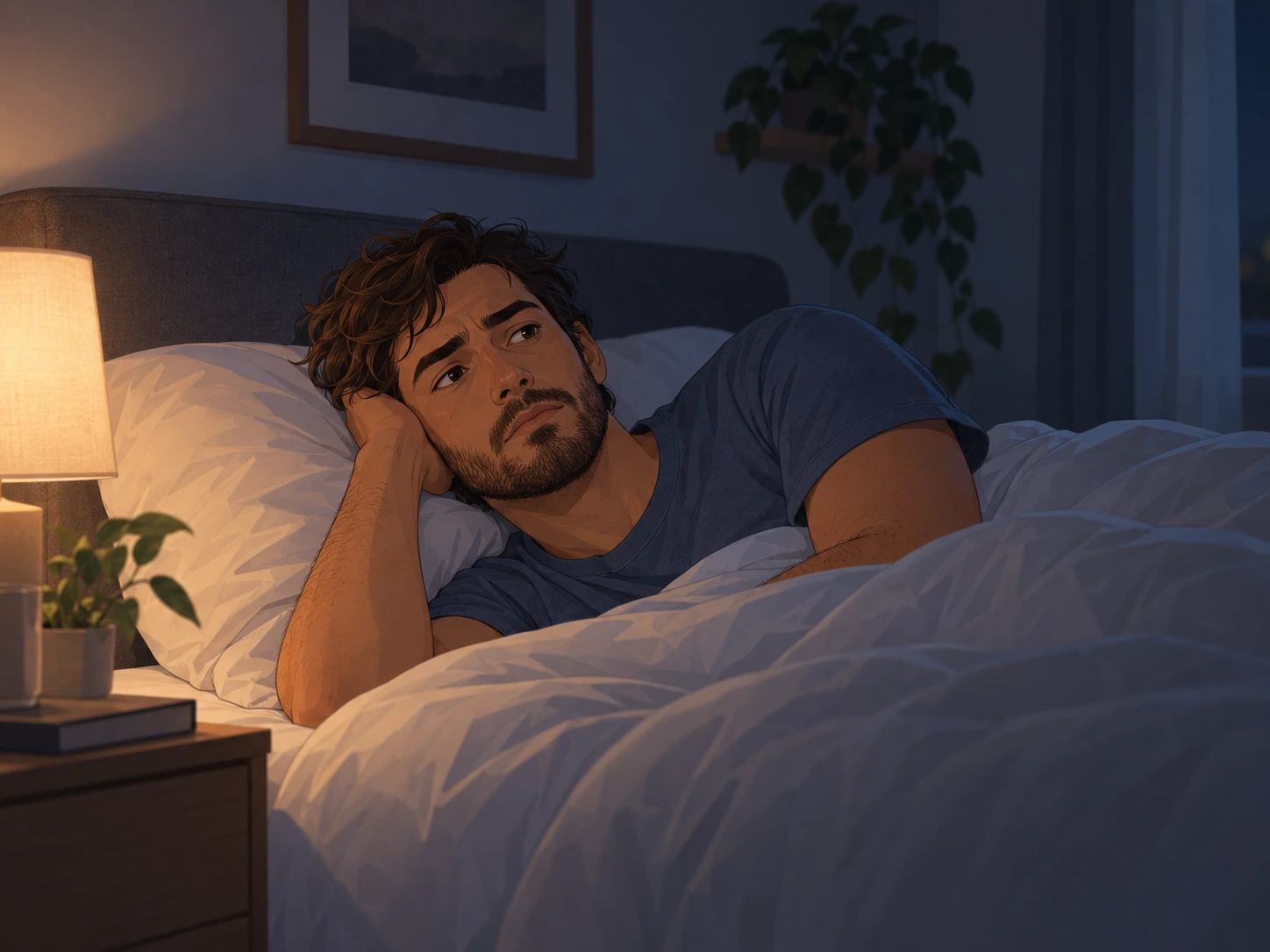
PTSD and sleep problems can become closely connected because the sense of danger created by trauma does not necessarily disappear when the day ends. You may feel exhausted but struggle to settle, wake repeatedly during the night or find yourself suddenly alert after a distressing dream.

Nightmares are one possible part of this pattern, but they are not the only way PTSD can affect sleep. Some people notice that bedtime makes them more watchful, while others wake easily or find it difficult to relax again once they are awake.

Sleep difficulties can also have causes other than PTSD, so the wider context matters. Our guide to understanding PTSD explains the broader pattern of trauma symptoms. Here, we look specifically at what can happen around sleep and why night-time can sometimes become another period of heightened alertness.

Key Takeaways

PTSD can affect falling asleep, staying asleep and how safe or settled night-time feels.

Nightmares are one possible sleep difficulty, but not everyone with PTSD experiences them.

Hypervigilance can make it difficult to move from monitoring for possible danger into rest.

Waking from a distressing dream can leave the body feeling alert even after you realise you are safe.

Broken sleep can affect energy, concentration and emotional wellbeing the following day.

Sleep problems can have several causes and should not automatically be assumed to come from PTSD.

CBT can work with trauma memories, present-day threat and sleep-related patterns without reducing treatment to a list of sleep tips.

How PTSD and sleep can become connected

Sleep usually involves becoming less engaged with what is happening around you. You stop monitoring your surroundings as closely and allow yourself to rest.

That can be more difficult when trauma has left your attention strongly focused on possible danger.

The NHS overview of PTSD lists difficulty sleeping, nightmares and hypervigilance among possible PTSD symptoms. Hypervigilance involves feeling particularly alert to possible danger, which can make it harder for the mind and body to settle when it is time to rest.

For someone experiencing this, going to bed does not necessarily mean the threat system immediately settles.

Feeling on guard when you are trying to rest

You may be physically tired while remaining mentally alert.

Small noises might catch your attention. You may listen for movement outside, notice changes in the room or become particularly aware of bodily sensations.

This does not mean there is actually danger nearby. The difficulty is that your attention remains organised around the possibility that something could happen.

When that alertness continues at bedtime, relaxing enough to fall asleep can become harder.

infographic illustrating Feeling on guard when you are trying to rest

Sleep can involve giving up some control

Trauma can change how safe it feels to become less aware of your surroundings.

For some people, sleep involves a temporary loss of the monitoring and control that helps them feel protected during the day.

This does not mean everyone with PTSD is consciously frightened of falling asleep. The pattern can be much subtler.

You may simply notice that you become more alert as the room becomes quiet or that relaxing feels unexpectedly difficult.

Trauma reminders can become more noticeable at night

During the day, work, conversations and other activities can occupy your attention.

At night, some of those distractions disappear.

Trauma-related thoughts, images, bodily sensations or memories may therefore become more noticeable when you are lying quietly.

If those experiences create a feeling of current danger, they can make it difficult to move towards sleep.

infographic illustrating How PTSD and sleep can become connected

Different PTSD sleep problems can feel very different

PTSD sleep difficulties do not look the same for everyone.

One person may struggle mainly with falling asleep. Someone else may fall asleep quickly but wake several times. Another person may sleep until a nightmare wakes them and then struggle to settle again.

Research also suggests that sleep difficulties associated with PTSD can take different forms. A recent review of sleep disturbances in PTSD describes insomnia-type difficulties and trauma-related nightmares as prominent concerns, while noting that objective sleep-study findings have been less consistent across research.

Difficulty falling asleep

You may go to bed feeling tired but notice that your alertness increases once you try to rest.

Your attention might move towards noises, possible threats or thoughts about what happened.

You may also become aware that you are trying very hard to fall asleep.

Sleep can then start feeling like something you need to make happen rather than something that arrives naturally.

Repeated waking

Some people wake frequently during the night.

A noise, dream or sudden feeling of alertness may be enough to interrupt sleep.

Once awake, you may immediately begin checking what is happening around you. Even if everything appears safe, your body may take longer to settle again.

Difficulty returning to sleep

Being awake in the middle of the night can create another layer of pressure.

You may start thinking about how tired you will feel tomorrow or wondering whether another nightmare is going to happen.

Attention then shifts away from resting and towards predicting what the remainder of the night might bring.

Why PTSD nightmares can make sleep harder

PTSD nightmares can be particularly disruptive because their effects do not necessarily stop the moment someone wakes up.

Some people experience dreams that are closely connected with the traumatic event, while others have distressing dreams that contain similar feelings of fear, helplessness or danger without recreating exactly what happened.

A nightmare does not have to replay the trauma exactly

Some nightmares may contain recognisable parts of what happened.

Others may involve completely different situations while carrying a similar emotional tone.

It is therefore better not to assume that every detail in a nightmare represents something specific about the traumatic event.

Dream content can vary considerably.

The difficulty can continue after waking

A distressing dream may end suddenly, but the emotional and physical response can remain.

Someone might wake with their heart beating quickly, feel disoriented for a moment or immediately begin checking the room.

They may understand that they were dreaming while still feeling physically prepared for danger.

The body and attention can therefore take longer to settle than the dream itself.

infographic illustrating Why PTSD nightmares can make sleep harder

Worrying about another nightmare can affect bedtime

After several difficult nights, bedtime can begin to carry its own anticipation.

Someone may start wondering whether they will have another nightmare or whether they will manage to sleep properly.

That anticipation can make the period before sleep feel more significant.

Nightmares can therefore affect more than the moment when the dream occurs. They can also change how the person approaches sleep beforehand.

How broken sleep can affect the following day

A difficult night does not necessarily remain a night-time problem.

Poor or interrupted sleep can influence how manageable the following day feels.

Concentration can become harder

When you are tired, tasks that normally require little effort may demand more concentration.

You might need to reread information, lose track of a conversation more easily or find it difficult to stay focused during a meeting.

If PTSD symptoms are already drawing attention towards possible danger or trauma reminders, tiredness can add another demand on concentration.

Everyday stress can feel harder to manage

Poor sleep may also leave you with less energy for everyday pressures.

Things that would normally feel manageable can become more frustrating when you are exhausted.

This does not mean poor sleep automatically causes anger, anxiety or other PTSD symptoms. It can, however, add to the strain someone is already experiencing.

The next night can start to feel increasingly important

After sleeping badly, it is understandable to want the following night to go better.

The difficulty is that sleep can begin to feel like something that must go well.

Someone may spend the evening thinking about how much sleep they need or monitoring whether they are beginning to feel tired.

The more important sleep feels, the more attention may be directed towards it.

Our article on ways to deal with PTSD looks more broadly at everyday support and routines alongside professional treatment.

infographic illustrating How broken sleep can affect the following day

How PTSD and sleep problems can reinforce one another

PTSD and sleep problems can sometimes form a pattern in which night-time alertness, disrupted sleep and concern about the next night begin influencing one another.

Imagine someone called Sarah who has experienced several difficult nights.

As bedtime approaches, she starts wondering whether she will wake from another nightmare. Once in bed, a noise outside catches her attention and she stays awake listening to it.

Eventually, she falls asleep but wakes suddenly after a distressing dream.

The following day, she is exhausted and struggles to concentrate at work. By the evening, she is already wondering whether the same thing will happen again.

The pattern might look like this:

This is only an example, not a universal PTSD sleep cycle.

The important point is that trauma-related alertness, broken sleep and anticipation can begin interacting with one another.

Sleep problems are not always caused by PTSD

If someone already knows they have PTSD, it can be tempting to explain every sleep difficulty through trauma.

That is not always accurate.

Similar symptoms can have different explanations

Difficulty falling asleep, waking during the night and feeling tired during the day can happen for many reasons.

Stress, physical health, the sleeping environment and other sleep difficulties may all be relevant.

Someone can also have PTSD and a separate sleep problem at the same time.

This is why the wider pattern needs to be considered rather than assuming trauma explains every difficulty with sleep.

The wider pattern matters

A sleep problem does not diagnose PTSD.

Likewise, having PTSD does not automatically tell us why someone is struggling to sleep.

Assessment can look at what is happening before, during and after sleep, alongside the person’s wider PTSD symptoms and other relevant factors.

This distinction is particularly important if sleep problems are new, changing significantly or seem different from the person’s usual PTSD pattern.

infographic illustrating Sleep problems are not always caused by PTSD

How CBT works with PTSD and sleep difficulties

CBT does not approach PTSD-related sleep difficulties simply by telling someone how to sleep better.

The wider trauma pattern matters.

Understanding what keeps the sense of threat active

Therapy can explore what happens as night-time approaches.

Someone may notice that they start monitoring sounds, anticipating nightmares or interpreting normal sensations as signs that something is wrong.

These responses can make sense in the context of what the person has experienced.

CBT helps place them within the wider pattern of trauma memories, meanings and the continuing sense of threat.

Working with trauma memories and present-day meanings

Trauma-focused CBT can involve working with trauma memories, the emotions connected with what happened, trauma-related meanings, avoidance and the continuing feeling that danger is still present.

The aim is not simply to make someone sleep better. It is to understand and change the wider processes that keep the trauma feeling current.

Sleep difficulties may improve as the wider PTSD pattern changes, although that does not mean every sleep problem will automatically disappear.

Sleep may sometimes need specific attention

NICE guidance on PTSD recommends individual trauma-focused CBT for adults with PTSD or clinically important PTSD symptoms in appropriate circumstances. It also recognises that CBT targeted at specific symptoms such as sleep disturbance may sometimes be considered when someone is unable or unwilling to engage in trauma-focused treatment, or when particular symptoms remain afterwards.

This does not mean sleep-focused CBT replaces trauma-focused treatment in every case.

The approach depends on the individual, the wider PTSD pattern and what continues to cause difficulty.

infographic illustrating How CBT works with PTSD and sleep difficulties

Our Case Study

We have anonymised the following example for privacy reasons. Identifying details have been changed.

The problem Sarah had when she first contacted NOSA

Sarah came to NOSA with PTSD and was struggling with sleep.

She often felt exhausted during the day but became noticeably more alert when she went to bed. Small noises caught her attention, and distressing dreams sometimes woke her feeling as though she needed to check that everything around her was safe.

Broken sleep was also making it harder to concentrate at work.

The method used to understand and work with the problem

During therapy, we looked at how Sarah’s sleep difficulties fitted into her wider PTSD pattern.

Bedtime had gradually become another situation in which her attention was organised around possible danger.

Trauma-focused work addressed the memories and meanings connected with what had happened. We also looked at what Sarah did when she felt unsafe at night and how those responses fitted into the continuing sense of threat.

The progress made

Over time, Sarah became better able to recognise when her threat system was becoming active around sleep.

Night-time experiences felt less like evidence that danger was happening again.

Difficult nights could still occur, but they had less influence over how she approached the following evening.

Final Thoughts

Trauma can affect sleep in several different ways. Some people struggle to settle because they remain alert to possible danger. Others experience repeated waking, distressing dreams or difficulty returning to sleep once they are awake.

These patterns can also affect concentration and energy the following day, which may make the next night feel even more important.

Sleep difficulties are not identical for everyone and should not automatically be attributed to trauma simply because someone has PTSD.

If PTSD and sleep difficulties are affecting your everyday life and you would like professional support, you can learn more about our trauma therapy in Bristol and how trauma-focused CBT can help address the wider pattern of PTSD.

FAQs

Yes, sleep difficulties can occur as part of PTSD. These can include trouble falling asleep, waking during the night, nightmares and feeling unusually alert when trying to rest.

However, sleep problems can have several possible causes. Having difficulty sleeping does not by itself mean someone has PTSD, and someone who already has PTSD can also experience an unrelated sleep problem.

PTSD can involve hypervigilance, intrusive memories and an ongoing sense of possible danger.

Sleep requires someone to become less engaged with their surroundings, which can feel difficult when attention remains focused on possible threats.

Trauma-related thoughts or memories may also become more noticeable when the distractions of the day reduce.

Nightmares can occur with PTSD, but not everyone with PTSD experiences them.

Some nightmares may resemble parts of the traumatic event, while others may involve different situations with similar feelings of danger or fear.

A nightmare does not need to reproduce the trauma exactly to be distressing.

Waking ends the dream, but the body’s response can take longer to settle.

Someone may wake frightened, disoriented, or physically alert and immediately check their surroundings.

Even once they recognise that they are safe, it may take time for that heightened state to reduce.

Trauma-focused CBT can address the memories, meanings, avoidance and continuing sense of danger involved in PTSD.

When sleep difficulties are part of that wider pattern, therapy can also consider how night-time alertness, trauma reminders and responses to waking fit together.

In some circumstances, sleep difficulties may also need more specific therapeutic attention.

Author Bio

James Hicks

Disclaimer

This page is for general information and education. It is not personalised advice, diagnosis, or a substitute for professional assessment.

CBT Bristol

Take the First Step Towards Change

NOSA CBT offers evidence-based therapy for OCD, hoarding help, phobias, health anxiety, social anxiety, PTSD, panic disorder, and generalised anxiety disorder. We also provide a specialist OCD clinic, professional CBT supervision training, and CBT training and teaching for mental health professionals.

Get in touch today to find out how we can help.