
Understanding PTSD from Symptoms to Recovery

Understanding PTSDWhat we can help with?

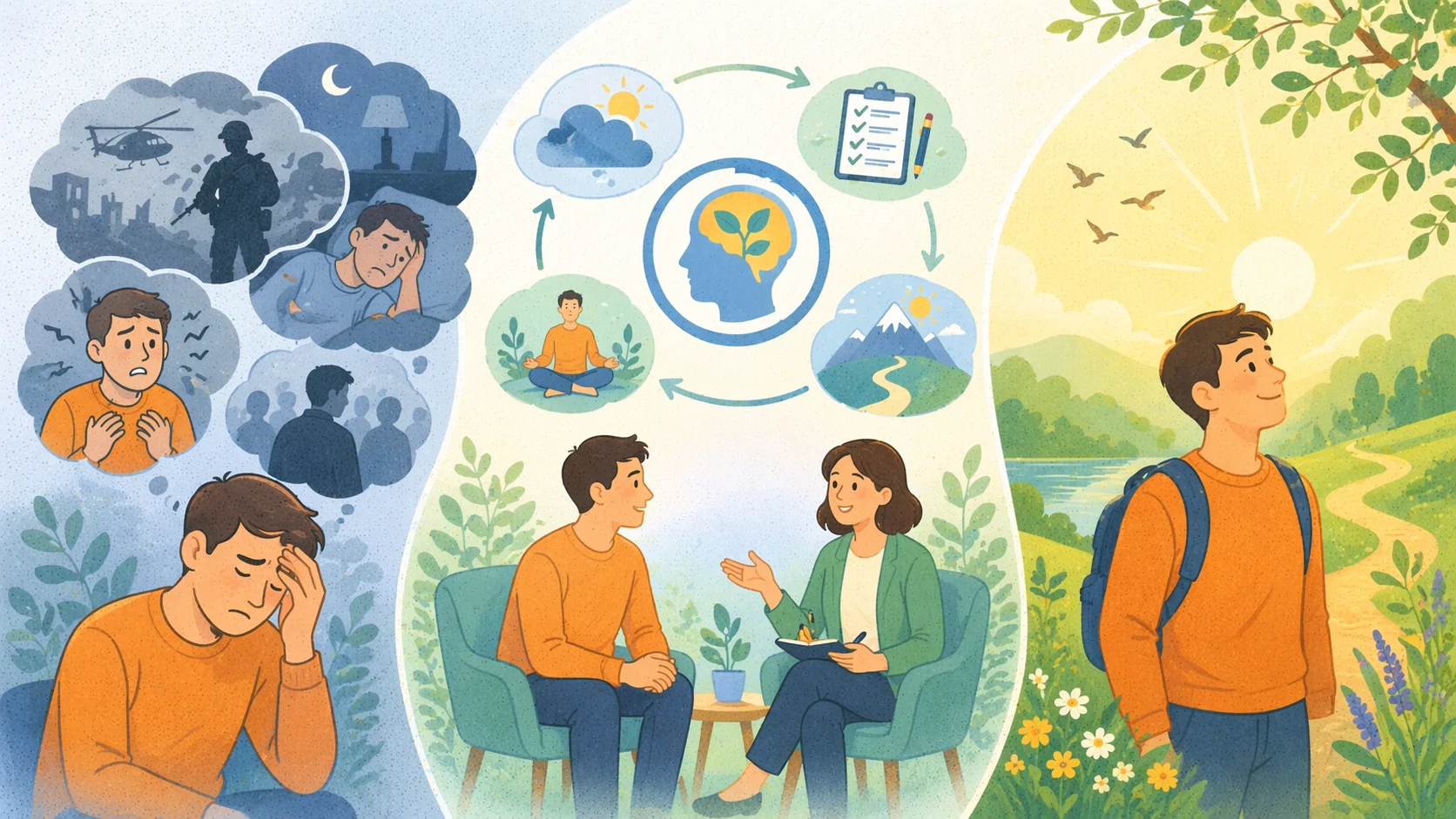
Understanding PTSD (post-traumatic stress disorder) means looking at more than flashbacks or nightmares alone. PTSD is a trauma-related mental health condition that can affect memories, emotions, attention, the body, and a person’s sense of safety in the present.

For some people, PTSD shows up as vivid re-experiencing symptoms and strong avoidance. For others, it is more bound up with hypervigilance, anger, guilt, emotional numbness, sleep problems, or the feeling that danger is never far away. That is one reason PTSD can be misunderstood, both by the person experiencing it and by the people around them.

Below, we look at PTSD from a CBT perspective, including symptoms, triggers, beliefs, and what therapy usually explores. It is written for people trying to make sense of their own symptoms, as well as family members or professionals who want a clearer picture of how PTSD works. If PTSD is affecting your life, speak to us about CBT for PTSD and C-PTSD.

What Is PTSD?

What PTSD is

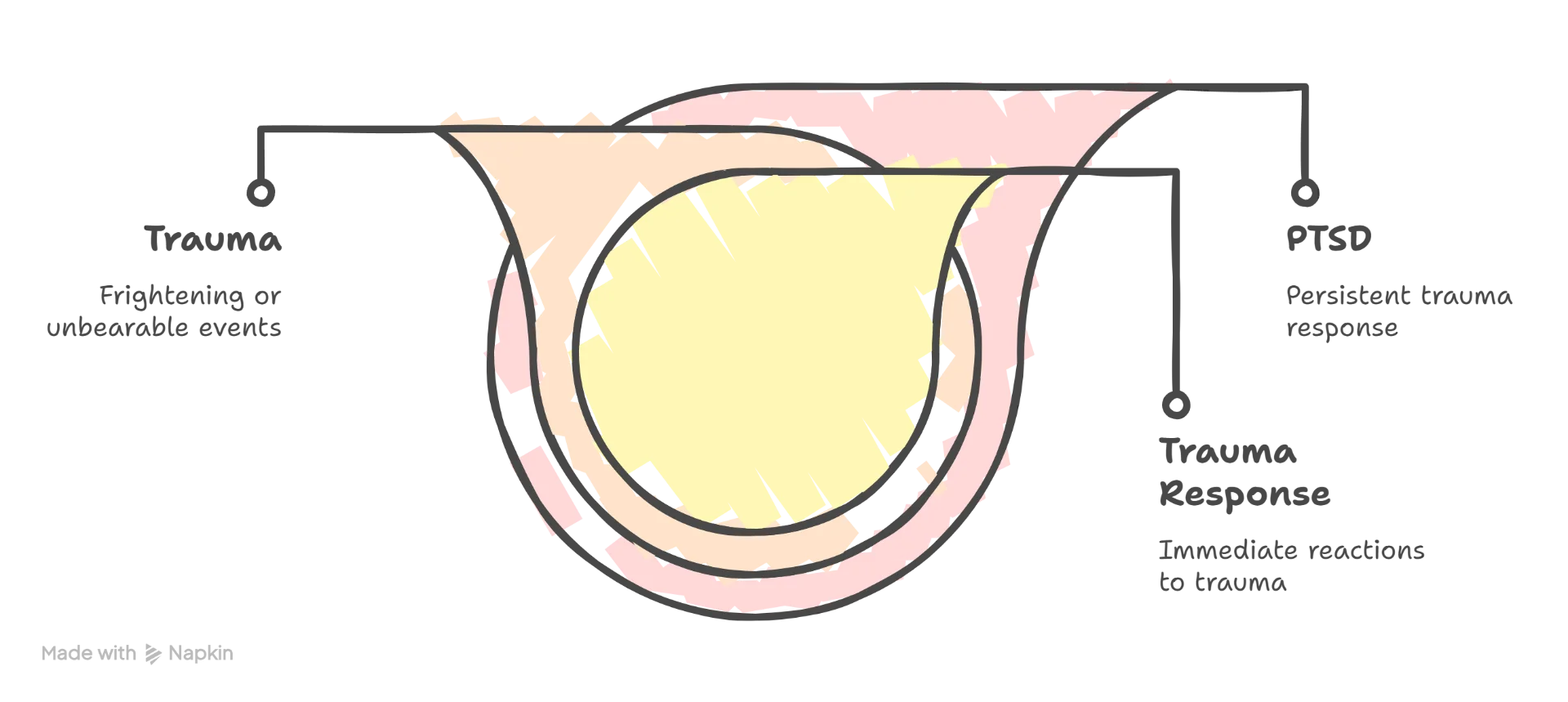
PTSD is a pattern of trauma-related symptoms that can develop after someone experiences or witnesses an event that feels overwhelming, threatening, or deeply distressing. The NHS overview of PTSD explains that it is linked with very stressful, frightening, or distressing events. It is not simply a memory of something difficult that happened. It involves the mind and body continuing to respond as if danger is still close, even when the event is over.

What trauma means in this context

In PTSD, trauma refers to an event, or a series of events, that the person experienced as frightening, shocking, or unbearable. Two people can go through similar situations and respond differently, which is why trauma is not only about the event itself. It is also about the meaning the event takes on and the way it continues to be processed afterwards.

PTSD vs a normal trauma response

Many people feel shaken after a traumatic event. They may feel alert, upset, distracted, or emotionally numb for a period of time. PTSD is different because the symptoms remain active and continue to affect daily life long after the event has passed.

infographic illustrating What Is PTSD

Common Symptoms of PTSD

Re-experiencing symptoms

One of the clearest parts of PTSD is re-experiencing. The NHS symptoms page for PTSD describes this as the most typical symptom, which can include flashbacks, nightmares, repetitive distressing images, and strong physical reactions. These experiences are not simply memories recalled in a calm way. They often feel intrusive, vivid, and difficult to control.

Avoidance in PTSD

Avoidance often develops because reminders of the trauma feel too overwhelming to face. A person may avoid conversations, certain roads, news stories, people, sounds, or even their own thoughts if those things seem linked to what happened. Avoidance can bring short-term relief, but it can also keep the trauma feeling dangerous.

Hypervigilance

PTSD can keep the threat system on high alert. This is one of the key parts of understanding PTSD from a CBT perspective. This is often called hypervigilance. Someone may feel constantly on edge, easily startled, tense, or watchful. Even ordinary situations can begin to feel loaded with possible danger.

Sleep and concentration problems

Sleep is often disrupted in PTSD, especially where nightmares, light sleep, or repeated waking are involved. Concentration can also become harder because attention is pulled towards scanning, monitoring, or trying to prevent something bad from happening again. Over time, this can leave people mentally exhausted.

Why PTSD Can Feel Like the Trauma Is Happening Again

Why PTSD symptoms can feel immediate and overwhelming

A key feature of PTSD is that the trauma can feel psychologically present rather than safely in the past. It can feel less like a memory and more like current danger, which helps explain why symptoms can feel so overwhelming.

Flashbacks, intrusive memories, and trauma reminders

Flashbacks are episodes in which the trauma feels as though it is happening now. Intrusive memories are unwanted recollections that break into awareness. Trauma reminders are cues that trigger distress because the mind has linked them with danger. These are related experiences, but they are not identical.

PTSD and bodily sensations

PTSD is not only psychological. The body can react quickly and intensely, with changes in heart rate, muscle tension, nausea, sweating, or shakiness. These sensations can make the danger feel immediate, even when the person is safe.

PTSD and panic attacks

Some people with PTSD also experience panic attacks. This does not mean PTSD and panic disorder are the same thing. It means trauma reminders, bodily changes, and the sense of immediate danger can sometimes build into a surge of fear that feels overwhelming.

The Cognitive Characteristics of PTSD

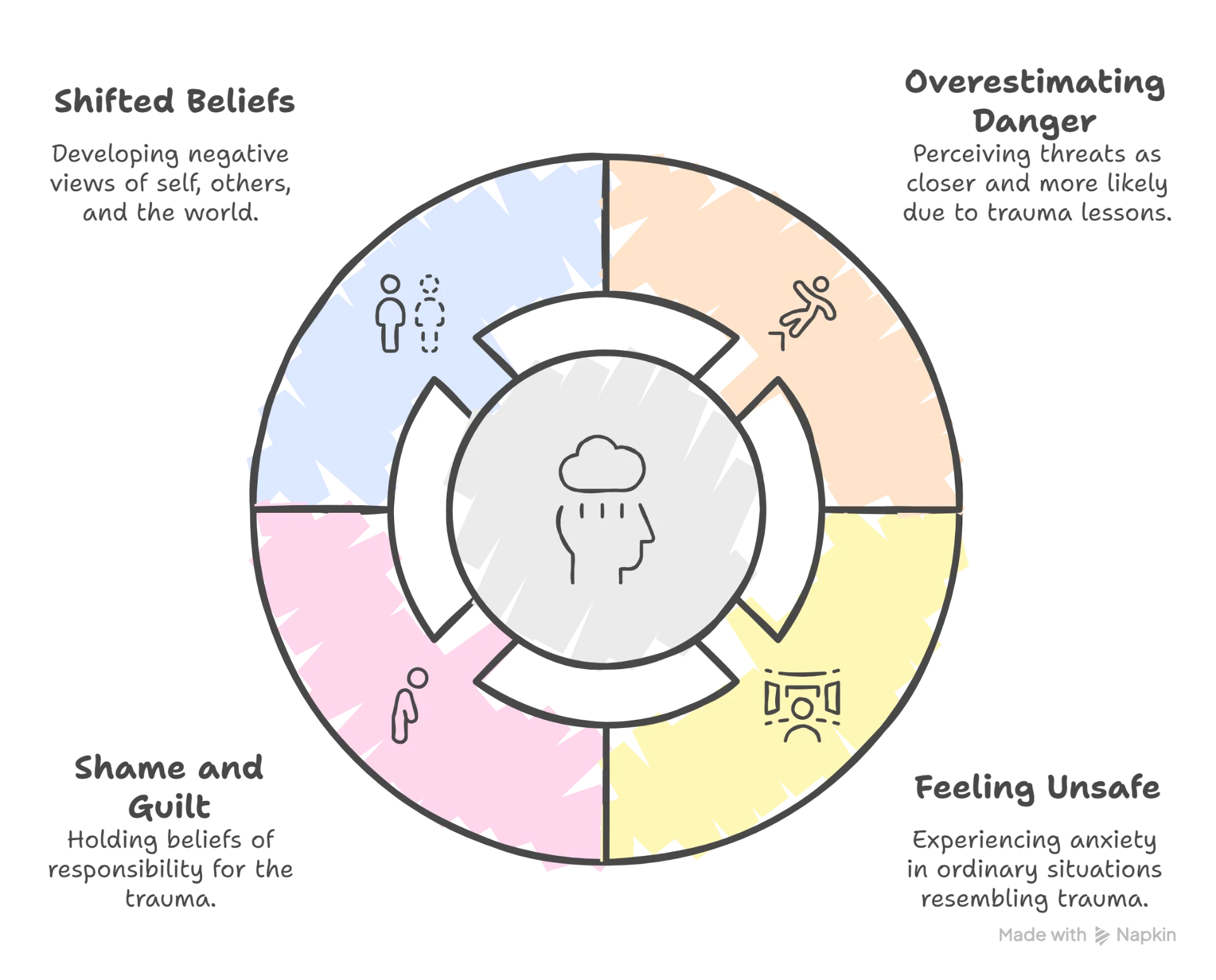
Overestimating danger

After trauma, the mind can become more likely to overestimate threat. Danger may feel closer, more likely, or harder to survive than it really is. This is not irrational in a simple sense. It is the mind trying to protect the person using what it learned during a highly distressing event.

Feeling unsafe in the present

PTSD often affects how the present is interpreted. A situation that would once have felt ordinary can now feel unsafe because it resembles part of the trauma in some way. From a CBT perspective, the problem is not only the memory itself, but the way the present is interpreted through the meanings attached to the past.

Shame, guilt, and self-blame

Many people with PTSD struggle with painful interpretations of what happened. They may believe they should have acted differently, prevented the event, noticed the danger sooner, or coped better afterwards. Shame and guilt can become central to the way the trauma is understood, even when the person is not truly responsible.

How PTSD affects beliefs about self, others, and the world

Trauma can alter core beliefs. Someone may begin to see themselves as weak, permanently damaged, or unsafe. Other people may come to seem untrustworthy, unpredictable, or dangerous. The world itself may feel less stable and less secure than it once did.

infographic illustrating The Cognitive Characteristics of PTSD

Triggers, Reminders, and the Threat System

External triggers and reminders

External reminders can include places, smells, sounds, anniversaries, media coverage, particular times of day, or certain types of interaction. These reminders may look small from the outside, but they can carry a powerful link to the trauma.

Internal triggers and bodily sensations

Internal reminders can be just as important. A thought, emotion, physical sensation, or fleeting image can trigger the same threat response. In PTSD, the mind and body can start reacting to internal cues as though they are warnings of present danger.

Why trauma reminders feel so intense

Trauma reminders feel intense because they are linked with alarm and survival. That is why a reminder can trigger a strong emotional and physical response even when the danger is over.

What Keeps PTSD Going?

Avoidance and PTSD cycles

From a CBT perspective, avoidance is one of the main processes that keeps PTSD active. Avoiding reminders may reduce distress for a short time, but it also stops the person from learning that the reminder itself is not the same as the trauma. The result is that fear stays organised around what is being avoided.

Safety behaviours in PTSD

Safety behaviours are actions aimed at preventing danger or reducing fear in the moment. This might involve sitting near exits, checking routes repeatedly, monitoring other people closely, or keeping constant control over plans. These behaviours make sense in context, but they can also keep the threat system switched on.

Hypervigilance and scanning for danger

When someone is constantly scanning for signs of threat, attention becomes biased towards danger. Neutral details are more likely to be interpreted as warnings. This can reinforce the sense that the world is unsafe and that the person must remain on guard.

Trauma-related beliefs

Beliefs such as “I cannot cope,” “Nowhere is safe,” or “If I let my guard down, something bad will happen” can keep symptoms going. These meanings shape how reminders are interpreted and how a person responds to them.

The PTSD cycle in CBT

CBT views PTSD as a cycle involving trauma memories, meanings, bodily reactions, and coping responses. Understanding PTSD in this way helps explain why symptoms can continue even when the trauma is over. A reminder activates distress, the person avoids or protects themselves, and the short-term relief makes the pattern more likely to happen again.

PTSD vs Other Mental Health Problems

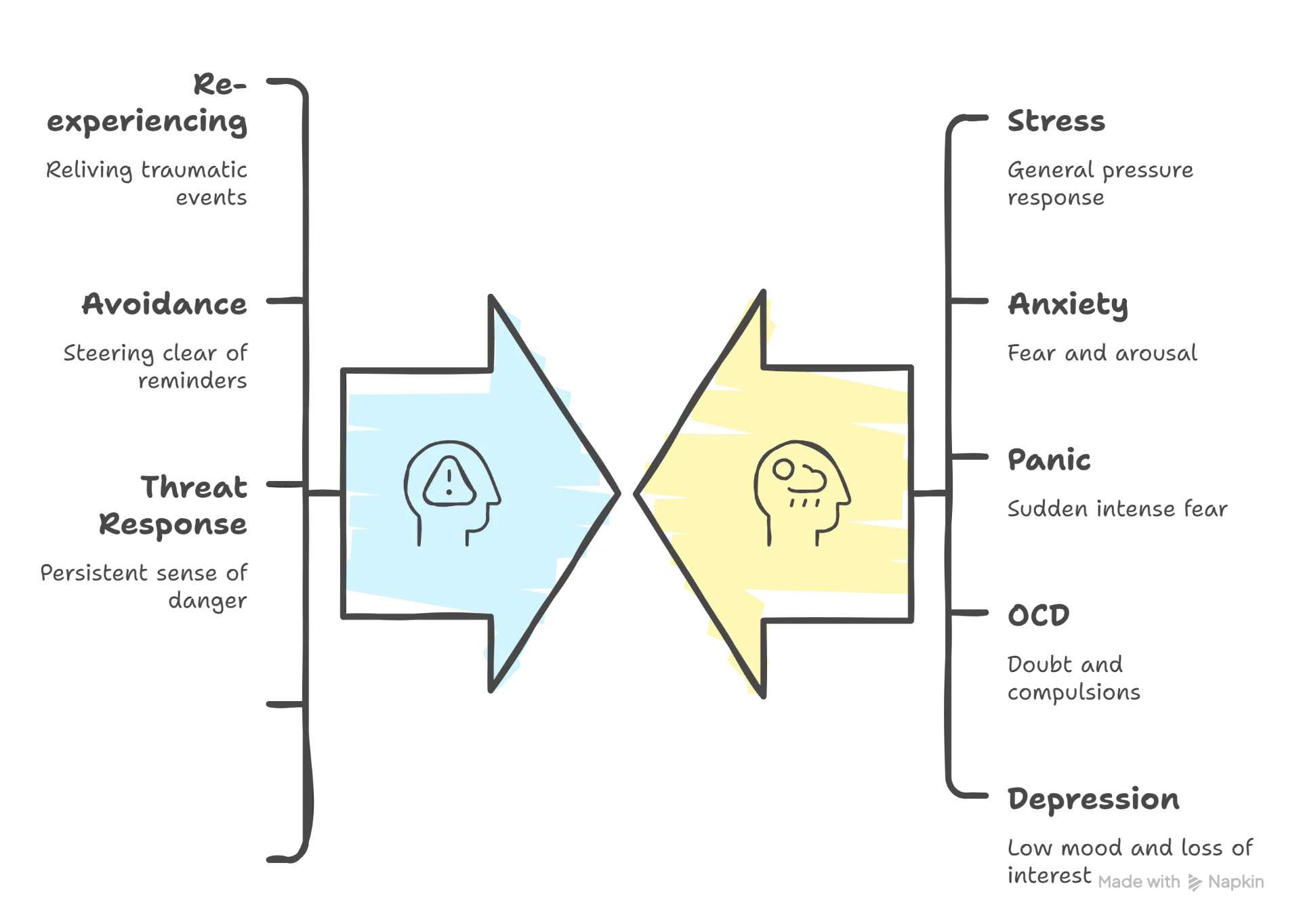
PTSD vs stress

Stress is a broad response to pressure or challenge. PTSD is specifically linked to traumatic events and includes symptoms such as re-experiencing, avoidance, and a persistent sense of threat. Although both can affect sleep and concentration, PTSD has a clearer trauma-related pattern.

PTSD vs anxiety disorders

PTSD overlaps with anxiety because both involve fear, anticipation, and physical arousal. The difference is that PTSD is organised around trauma memories, reminders, and meanings connected to what happened. For a closer look at this distinction, read PTSD or anxiety and how to tell the difference.

PTSD vs panic disorder

Panic disorder centres on recurring panic attacks and the fear of having more of them. PTSD can involve panic attacks, too, but they are usually linked with trauma reminders, trauma meanings, or the sense that danger is present again.

PTSD vs OCD

PTSD and OCD can both involve intrusive experiences and attempts to feel safer. In PTSD, the intrusive content is tied to trauma and threat. In OCD, the problem usually centres more on doubt, obsessional fear, and compulsive attempts to reduce uncertainty.

PTSD vs depression

PTSD and depression can occur together, and both can involve withdrawal, sleep disruption, and negative thinking. In PTSD, those changes are tied to trauma and threat. In depression, the dominant pattern is usually low mood, hopelessness, and loss of interest.

infographic illustrating PTSD vs Other Mental Health Problems

Complex PTSD Explained

What complex PTSD is

Complex PTSD is related to repeated, prolonged, or inescapable trauma, especially where the person had little control or little chance of safety. It includes the core features of PTSD but usually involves broader difficulties with emotions, relationships, and self-perception.

PTSD vs complex PTSD

PTSD and complex PTSD overlap, but complex PTSD tends to include more persistent difficulties with emotional regulation, connection with others, and a stable sense of self. The NHS page on complex PTSD notes that symptoms can include shame, guilt, relationship problems, and feeling disconnected from other people.

Emotional responses in complex trauma

In complex trauma, people may struggle with anger, numbness, shame, distrust, or a chronic sense of threat. Because this topic deserves fuller explanation, it is best handled in a dedicated page rather than explored in depth here.

How PTSD Affects Daily Life

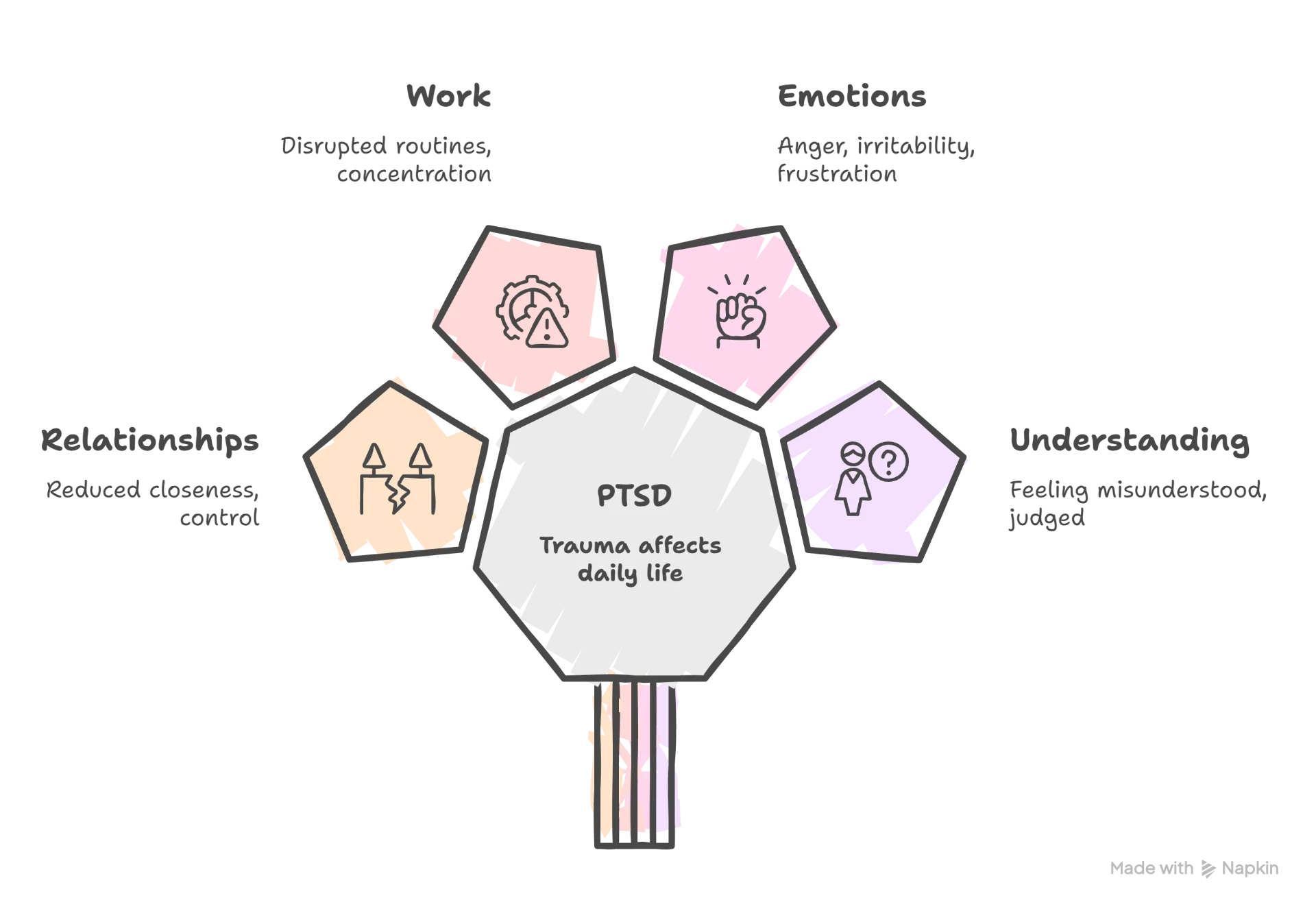
How PTSD affects relationships and family life

PTSD can affect closeness, trust, communication, and emotional availability. Family members may notice withdrawal, irritability, avoidance, or a strong need for control. Without understanding the trauma pattern, these changes can easily be misread.

How PTSD affects work and daily life

Daily tasks can become more difficult when attention is taken up by scanning, reminders, poor sleep, or the need to avoid certain situations. Work, travel, routines, and concentration can all be affected, even when the person looks outwardly fine.

Anger, irritability, and frustration

PTSD is not always experienced as fear alone. For some people, it shows up as anger, irritability, or a short fuse. These reactions are often tied to hyperarousal, threat sensitivity, and the strain of living in a state of alertness. You can read more about this in how CBT helps with PTSD and anger.

Feeling misunderstood

Because PTSD involves patterns that are often invisible to other people, many individuals feel misunderstood. Others may only see avoidance, irritability, detachment, or inconsistency, without recognising the trauma-based logic underneath those reactions.

infographic illustrating How PTSD Affects Daily Life

What Assessment Usually Explores

The traumatic event or events

A CBT-informed assessment usually begins by understanding the event, or events, that may have shaped the current symptoms. This is not only about facts. It is also about how the person experienced what happened.

Key triggers and reminders

Assessment often looks at what tends to activate the symptoms now. This may include specific external reminders, internal sensations, or relationship situations that bring the threat system to life.

Intrusive symptoms and avoidance

A clinician will usually want to understand the current pattern of flashbacks, nightmares, intrusive memories, and avoidance. These give important clues about how the trauma is being processed.

Safety behaviours and coping patterns

Assessment also looks at what the person does to feel safe or reduce distress. These patterns are relevant in CBT because they often help explain what is maintaining the problem.

Beliefs, meanings, and impact on daily life

PTSD is not only about symptoms. Assessment usually explores what the trauma has come to mean, how the person now sees themselves or the world, and how the problem is affecting work, relationships, and daily functioning.

How CBT Helps in Understanding PTSD

The CBT model of PTSD

CBT looks at PTSD as an interaction between trauma memories, present-day meanings, bodily reactions, and coping responses. It is interested not only in what happened, but in how the trauma is still being experienced now.

How memories, meanings, and behaviours interact

In CBT, a reminder can activate a memory or belief, such as “I am not safe.” That can trigger physical arousal and protective behaviours, which then feed back into the original sense of threat.

What maintains PTSD from a CBT perspective

This model helps explain why PTSD can persist even when the traumatic event is over. It also shows why therapy focuses on the present-day pattern that keeps symptoms active.

How Trauma-Focused CBT Works

What trauma-focused CBT is

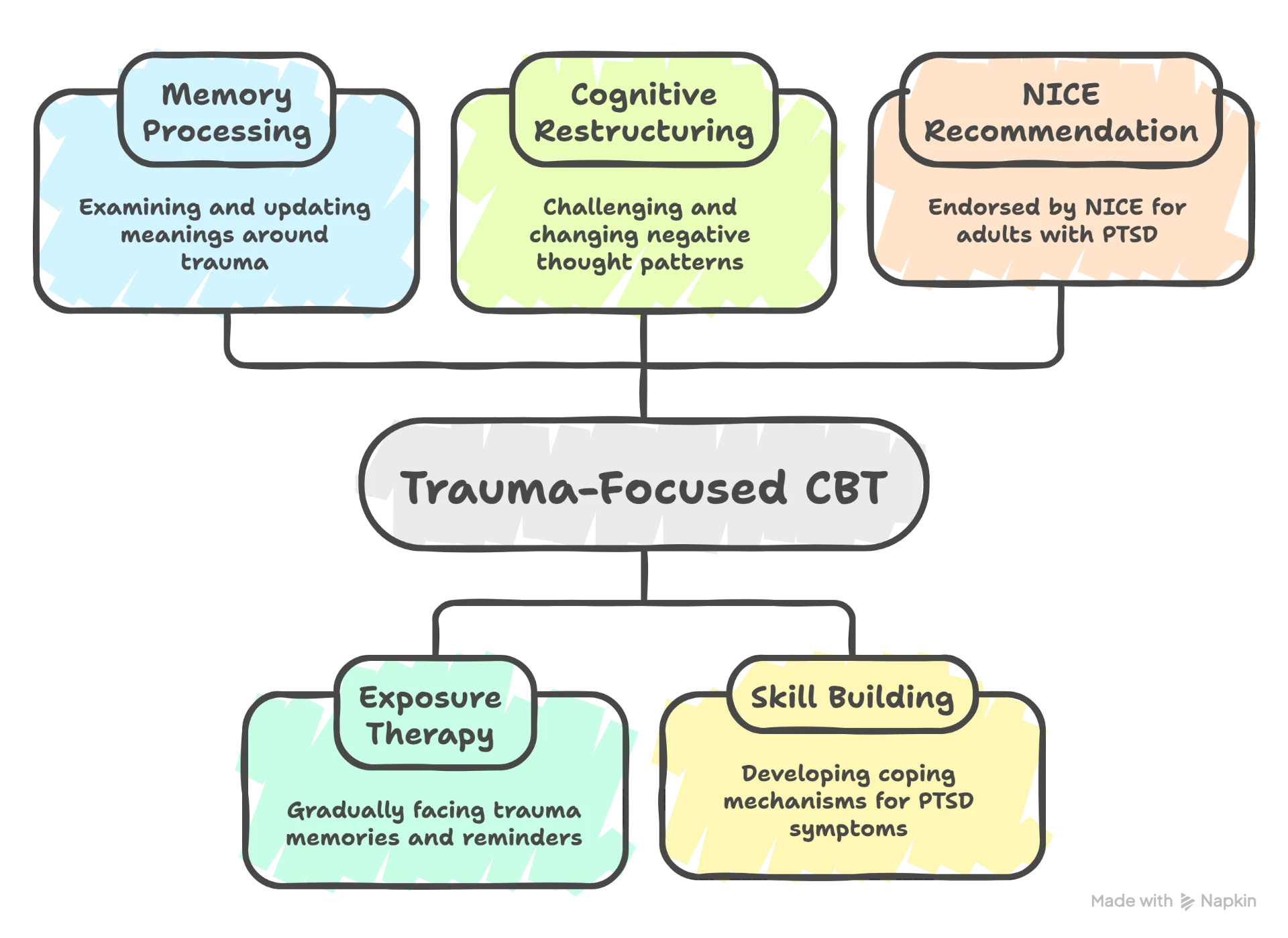
Trauma-focused CBT is a structured form of therapy designed to help people process traumatic memories and the meanings attached to them. It is built around the specific way PTSD is understood within CBT.

How trauma-focused CBT differs from general CBT

General CBT may work with worry, panic, low mood, or patterns of negative thinking more broadly. Trauma-focused CBT is more specific to trauma memories, trauma meanings, and the behaviours that keep the threat active.

Memory processing and meaning in trauma-focused CBT

A central part of this work involves helping the person process the memory differently and examine the meanings that have formed around it. This can include beliefs about responsibility, safety, vulnerability, trust, or permanent damage.

Exposure and trauma memory work in CBT

In trauma-focused CBT, work on memories and reminders happens in a planned and clinically guided way with a therapist. The aim is to help the trauma become more fully processed and less likely to be experienced as a current threat.

What CBT for PTSD typically focuses on

Therapy often focuses on trauma reminders, avoidance, hypervigilance, safety behaviours, and trauma-related beliefs. The aim is to reduce the sense of present danger and change the patterns that keep PTSD active.

Does CBT work for PTSD?

NICE states that adults with PTSD who present more than 1 month after a traumatic event should be offered an individual trauma-focused CBT intervention. That recommendation reflects the central role of trauma-focused CBT in evidence-based care for PTSD.

infographic illustrating How Trauma-Focused CBT Works

Is PTSD long-term?

Why PTSD can feel persistent

PTSD can feel long-term because the symptoms are often tied to powerful memory networks, deeply held beliefs, and repeated patterns of avoidance or threat monitoring.

How symptoms and patterns can change over time

Symptoms can shift over time. Some people notice flashbacks becoming less frequent while irritability, detachment, or avoidance become more prominent. Others find that symptoms intensify around reminders, anniversaries, life changes, or new stress.

What recovery can look like in CBT?

From a CBT perspective, recovery is not about erasing the past. It is about the trauma no longer dominating the present in the same way. If you want more reading on this topic, see 6 ways to deal with PTSD.

Looking Ahead

PTSD can affect far more than memories alone. It can shape how safe the present feels, how the body responds to reminders, and how a person understands themselves, other people, and the world around them.

From a CBT perspective, PTSD is not only about what happened in the past. It is also about the patterns that keep the trauma feeling active in the present. Understanding PTSD in this way can make the condition feel more understandable and less confusing.

FAQs

PTSD is a trauma-related condition, while anxiety is a broader term that can apply to several different problems. PTSD usually includes re-experiencing, avoidance, and a strong sense of threat linked to traumatic memories and reminders.

Yes, PTSD can involve anger, irritability, and frustration. These reactions are often linked with hyperarousal, threat sensitivity, and the strain of staying on alert for long periods.

Trauma reminders can activate the same alarm systems that were active during the original event. That is why a reminder can feel intense even when the person knows the danger is no longer happening.

No. Complex PTSD includes the core features of PTSD, but it also involves broader difficulties with emotional regulation, relationships, and self-perception. The two are related, but they are not identical.

CBT can help by focusing on the meanings, memories, reminders, and behaviour patterns that keep PTSD active. In trauma-focused CBT, this work is done in a structured, therapist-guided way rather than through self-help exercises.

Author Bio

James Hicks

Disclaimer

This page is for general information and education. It is not personalised advice, diagnosis, or a substitute for professional assessment.

CBT Bristol

Take the First Step Towards Change

NOSA CBT offers evidence-based therapy for OCD, hoarding help, phobias, health anxiety, social anxiety, PTSD, panic disorder, and generalised anxiety disorder. We also provide a specialist OCD clinic, professional CBT supervision training, and CBT training and teaching for mental health professionals.

Get in touch today to find out how we can help.