

Longitudinal CBT Formulation for Anxiety Patterns

Longitudinal CBT Formulation for Anxiety PatternsWhat we can help with?

Longitudinal CBT Formulation is a way of understanding how anxiety patterns may develop over time, rather than only looking at what is happening in the present moment. For some people, anxiety starts to make more sense when current triggers are viewed alongside earlier experiences, deeper beliefs and the rules they have learned to live by.

This does not mean CBT gets stuck in the past. A longitudinal formulation is still used to guide change in the present. It helps a therapist and client understand why certain fears keep returning, why particular situations feel so threatening, and why some coping behaviours become hard to let go of. In that sense, the focus here is on how anxiety can be understood across time.

For a wider explanation of understanding Cognitive Behavioural Therapy, you can read our main guide.

Key Takeaways

  • Longitudinal formulation looks across time: It helps connect earlier experiences, beliefs, assumptions and present anxiety patterns.
  • It is not about blaming the past: The aim is to understand how patterns developed and what keeps them active now.
  • Beck’s model links beliefs and current symptoms: Beck’s longitudinal formulation shows how core beliefs and assumptions may be activated by later events.
  • It can make repeated anxiety patterns clearer: The same fear may appear in work, relationships, decisions or physical anxiety symptoms.
  • It can guide therapy: Once the pattern is clearer, CBT can focus on the beliefs and maintaining factors that are most useful to work on.

Understanding Longitudinal CBT Formulation

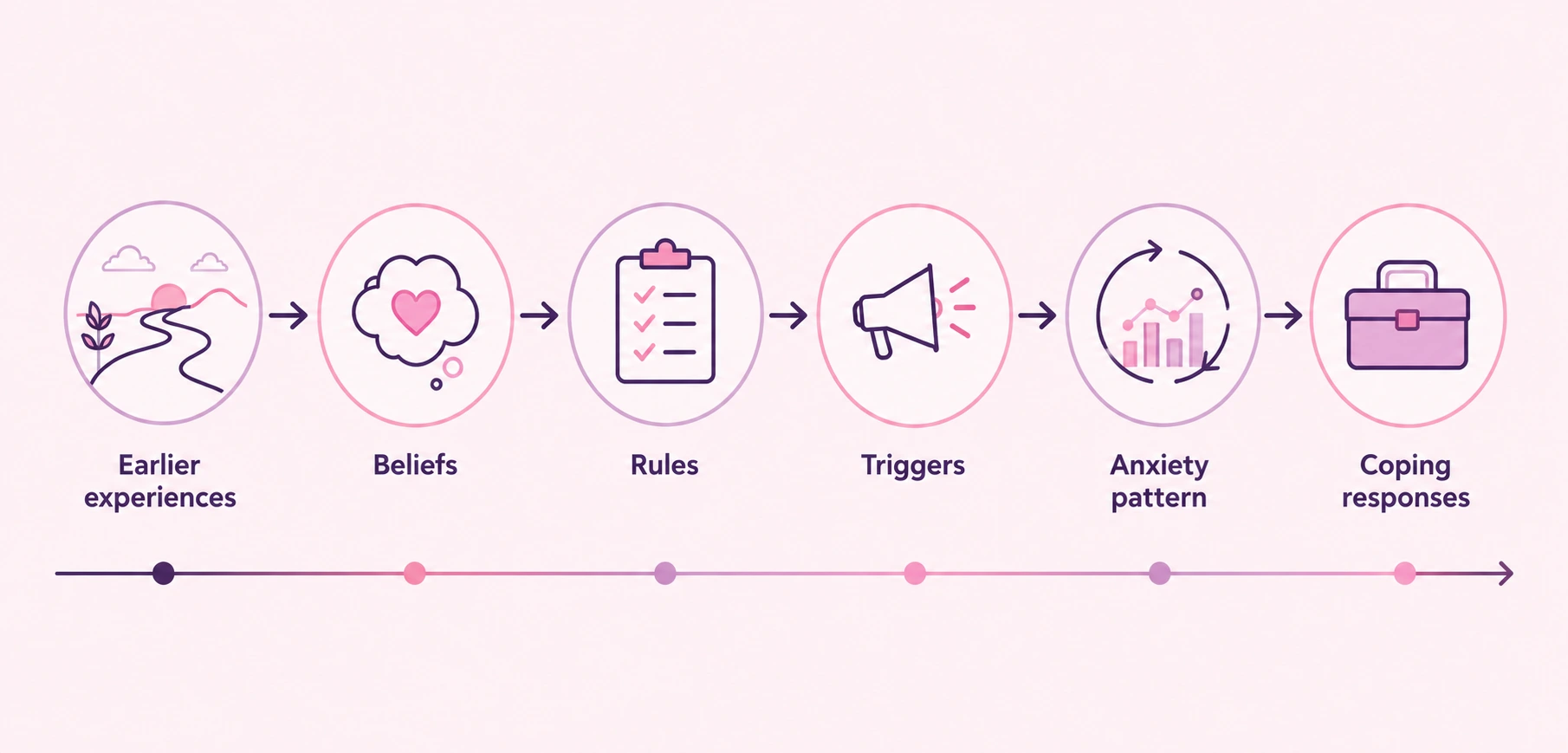
A longitudinal formulation in CBT looks at how a person’s difficulties may have developed across time. In CBT, this time-based way of understanding problems is often linked to Beck’s longitudinal formulation, based on the cognitive model developed by Dr Aaron T. Beck. It maps how earlier experiences, deeper beliefs, rules or assumptions and present anxiety patterns can connect. It goes beyond one recent anxiety cycle and asks how earlier experiences may have shaped beliefs and rules that still influence anxiety in the present.

This kind of formulation is a working map rather than a fixed story. It can be reviewed and refined as therapy develops.

A Timeline, Not Just a Snapshot

Some CBT work focuses on what is happening now. That is often very helpful. A longitudinal formulation adds another layer by looking at the person’s timeline. It asks whether earlier learning may still affect how present situations are understood.

It Still Focuses on Change

Looking across time does not mean therapy becomes historical or abstract. The purpose is still practical. The formulation helps identify what can change now, even if some of the roots of the pattern are older.

Understanding Longitudinal CBT Formulation

How It Differs From Standard CBT Formulation

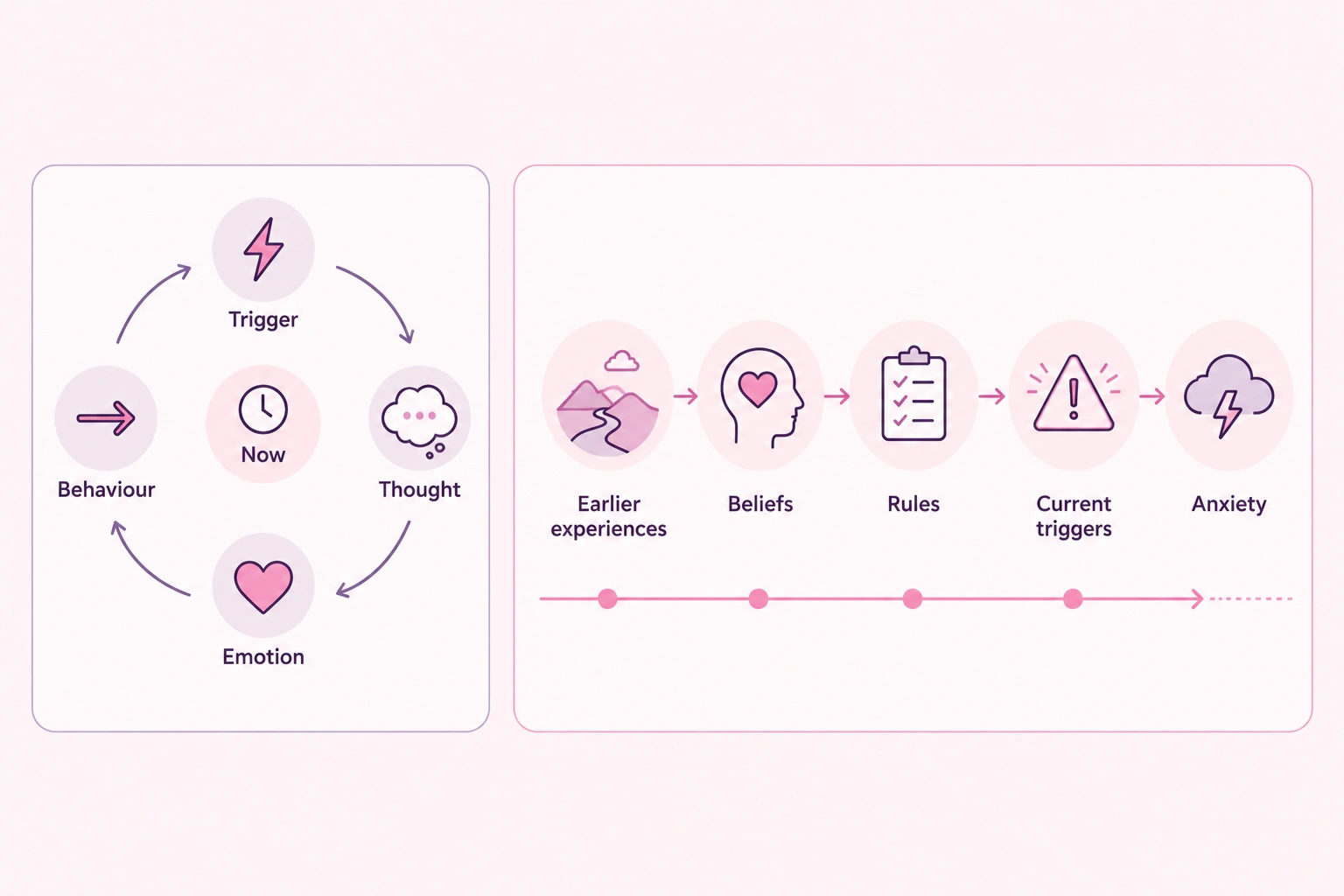
A standard CBT formulation often focuses on the current pattern. It looks at triggers, thoughts, emotions, body sensations, behaviours and the factors that keep the problem going now. That kind of formulation is often enough, especially when the difficulty is more straightforward or tied to a specific situation.

Longitudinal CBT Formulation adds the person’s timeline. It asks how someone may have learned certain beliefs or rules, and how those beliefs are activated in current situations. In other words, it does not replace a present-focused formulation. It builds on it.

CBT Formulation Looks at the Current Pattern

A present-focused formulation is useful for understanding what keeps anxiety active today. It can show how checking, avoidance, reassurance-seeking or over-preparing reduce distress briefly while keeping the wider pattern alive.

Longitudinal Formulation Adds the Timeline

A longitudinal formulation helps explain why similar fears keep appearing in different areas of life. It may show that the present pattern is linked to older beliefs about safety, responsibility, failure, criticism or uncertainty.

How It Differs From Standard CBT Formulation

When This Type of Formulation Is Useful

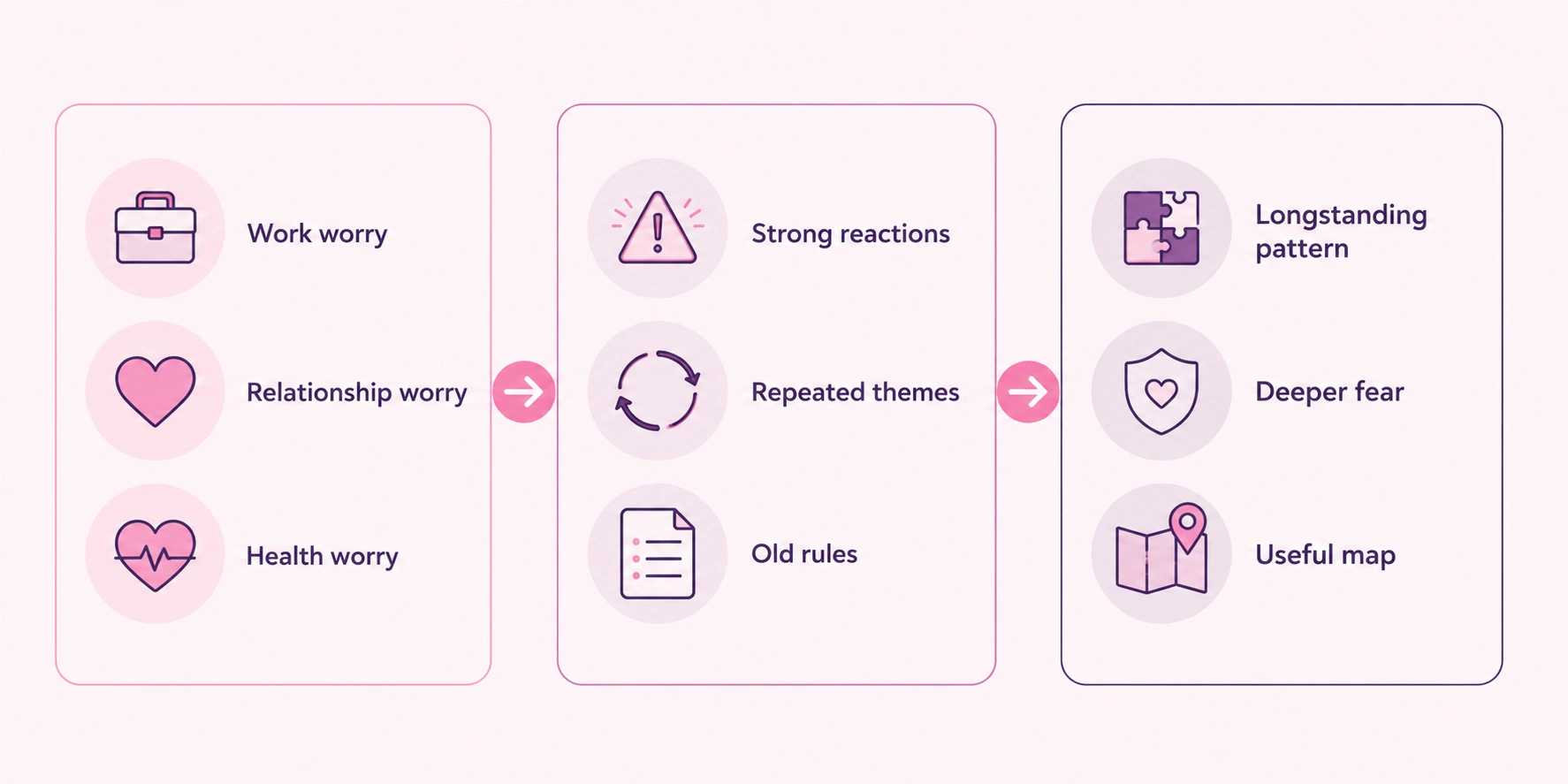
A longitudinal formulation is often useful when anxiety seems to show up in several areas of life rather than one clear situation. Someone may worry about work, relationships, health or decisions, but the same deeper fear may sit underneath each pattern.

It can also help when a person’s reaction feels stronger than the current situation seems to explain. In those cases, the formulation may show that an older belief or rule has been activated, which can make the present response feel more understandable.

This does not mean every CBT problem needs a longitudinal formulation. Sometimes, a present-focused map is enough. But when anxiety is longstanding, repeated or linked to a familiar theme, this wider view can be very helpful.

When This Type of Formulation Is Useful

The Main Parts of a Longitudinal Formulation

A longitudinal formulation often includes several connected parts. Together, they help explain how anxiety may have developed and what is keeping it active now.

Part of the formulation What it helps explain
Early experiences What the person may have learned about themselves, others or the world
Core beliefs Deep beliefs that may shape how situations are interpreted
Rules and assumptions Personal rules such as needing to be perfect, certain or in control
Critical incidents Later events that may activate old beliefs
Current triggers Present situations that set off anxiety
Anxious predictions What the person fears may happen
Coping responses What the person does to feel safer
Maintaining factors What keeps the anxiety active now

Early Experiences

Earlier experiences may include high expectations, criticism, instability, bullying, illness or repeated responsibility. These experiences do not automatically create anxiety, but they can influence what someone learns about themselves and the world.

Core Beliefs

As SAGE Journals on the key principles of CBT explains, Beck’s model includes core beliefs, dysfunctional assumptions and automatic thoughts. Core beliefs are the deeper beliefs beneath the surface. In anxiety, these may relate to being unsafe, not good enough, overly responsible or unable to cope.

Rules and Assumptions

Rules and assumptions are the personal rules people develop to manage life. They can sound like: I must not make mistakes. I need certainty before I can relax. I have to stay in control. These rules often seem sensible at first, but they can make everyday life feel more threatening.

Current Triggers and Maintaining Factors

A longitudinal formulation does not stop with the past. It connects earlier learning with current triggers, anxious predictions, coping responses and the behaviours that keep the anxiety active now.

Beck’s Longitudinal Formulation in CBT

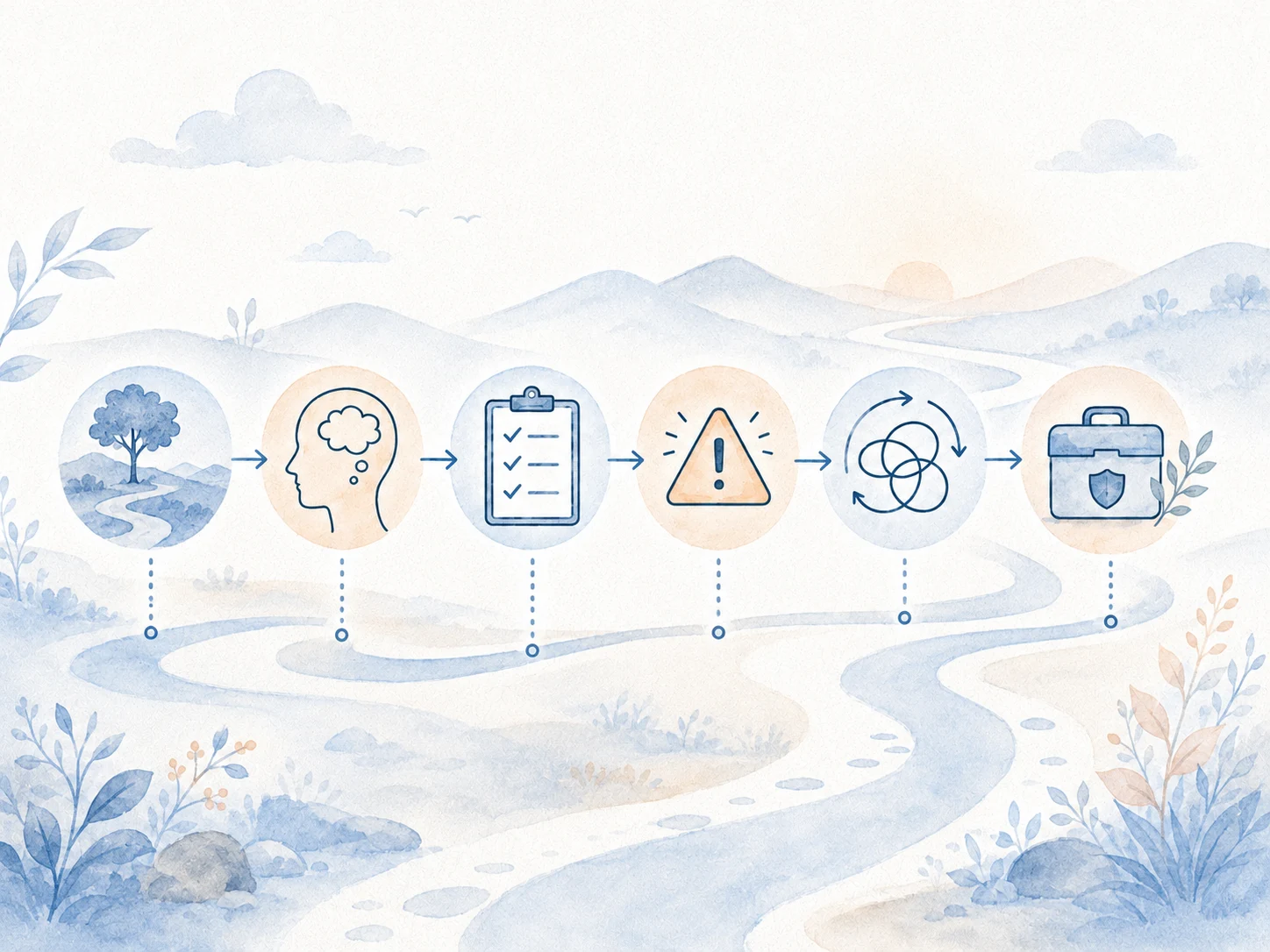
Beck’s longitudinal formulation in CBT is helpful because it shows a clear sequence. Earlier experiences, core beliefs, rules or assumptions, later events and current symptoms can link together over time. Earlier experiences can shape deeper beliefs. Those beliefs can then lead to rules for living. Later events may activate those beliefs, which can lead to anxious thoughts, emotional distress, physical symptoms and coping behaviours.

When that sequence is slowed down, it often becomes easier to see why certain situations feel so loaded.

Earlier Experiences and Core Beliefs

For example, someone who grows up in a very critical environment may start to believe that mistakes are dangerous or that being good enough depends on getting things right. Another person may learn that the world is unpredictable and that they must stay alert to be safe.

Rules and Assumptions

Those deeper beliefs can lead to rules for living. Someone may decide they must avoid mistakes, stay in control, prepare for every possibility or never let anyone down. These rules may reduce anxiety for a while, but they can also increase pressure.

Critical Incidents

Later events can activate those old beliefs. This might be criticism at work, uncertainty in a relationship, a health scare or a stressful period where the person feels under pressure. The event may seem small from the outside, but the meaning attached to it can be much bigger.

Current Anxiety Symptoms

Once activated, the pattern can show up as anxious thoughts, body sensations and behaviours such as checking, avoidance, reassurance-seeking or over-preparing. The behaviour may bring short-term relief while keeping the deeper fear in place.

Example of a Longitudinal Formulation for Anxiety

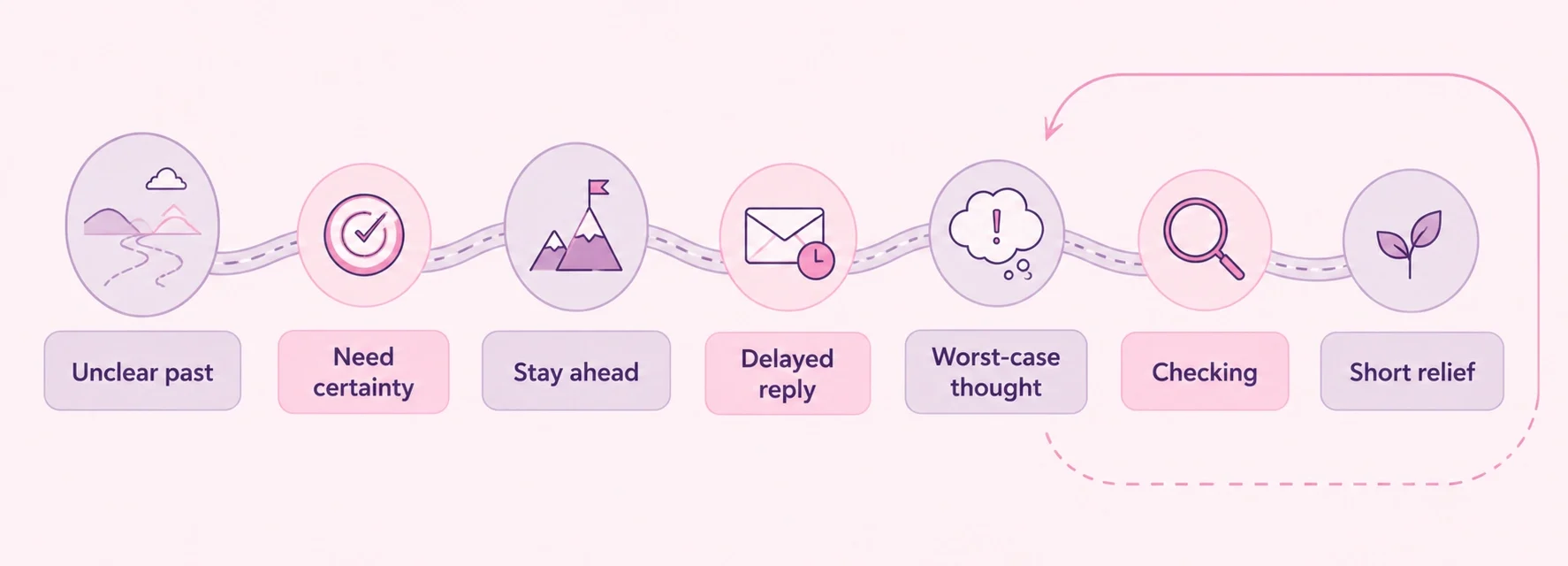
Imagine someone who grew up in an unpredictable environment where plans changed often, and problems were not explained clearly. Over time, they begin to believe that uncertainty is unsafe and that they need to know what is coming next to feel settled. From that belief, they develop a rule: stay one step ahead.

Years later, as an adult, they are waiting for a reply about an important appointment. The delay activates the old fear. Their minds jump to worst-case possibilities. Anxiety rises. They check their phone repeatedly, search for reassurance and find it hard to focus on anything else.

Viewed through the formulation, the present anxiety is not random. The checking brings short-term relief, but it also keeps the need for certainty active.

Example of a Longitudinal Formulation for Anxiety

How It Helps in Therapy

Longitudinal formulation in CBT can help therapy feel more joined up. Instead of seeing anxiety as a series of separate problems, therapist and client can start to see the common thread.

Building the Map Collaboratively

As Padesky.com on case conceptualisation explains, case conceptualisation in CBT is collaborative and can develop over time, sometimes later including a longitudinal explanation of predisposing and protective factors. That matters because the therapist is not imposing a story on the client. The map is built together.

Looking for Repeated Themes

In therapy, repeated themes may start to stand out. The person may notice the same fear of failure, rejection, danger, responsibility or uncertainty appearing in different situations.

Linking Past Learning to Present Patterns

Once these links are clearer, therapy can explore how older beliefs are being activated in the present. That often helps people understand why their reactions feel so strong, even when part of them knows the situation may not be dangerous.

Deciding Where to Work First

As Beck Institute on case formulation-driven CBT notes, formulation can help guide clinical decisions rather than leaving therapy at the level of a standard model alone. In practice, this means the therapist and client can decide whether to focus first on rules, beliefs, safety behaviours or other maintaining factors.

Case Study From a CBT Therapist’s Perspective

The following anonymised case study is written from a therapist’s point of view. The client’s name has been changed to Sarah to protect privacy, but it reflects the kind of pattern that may be explored in CBT.

The Client’s Condition When They First Made Contact

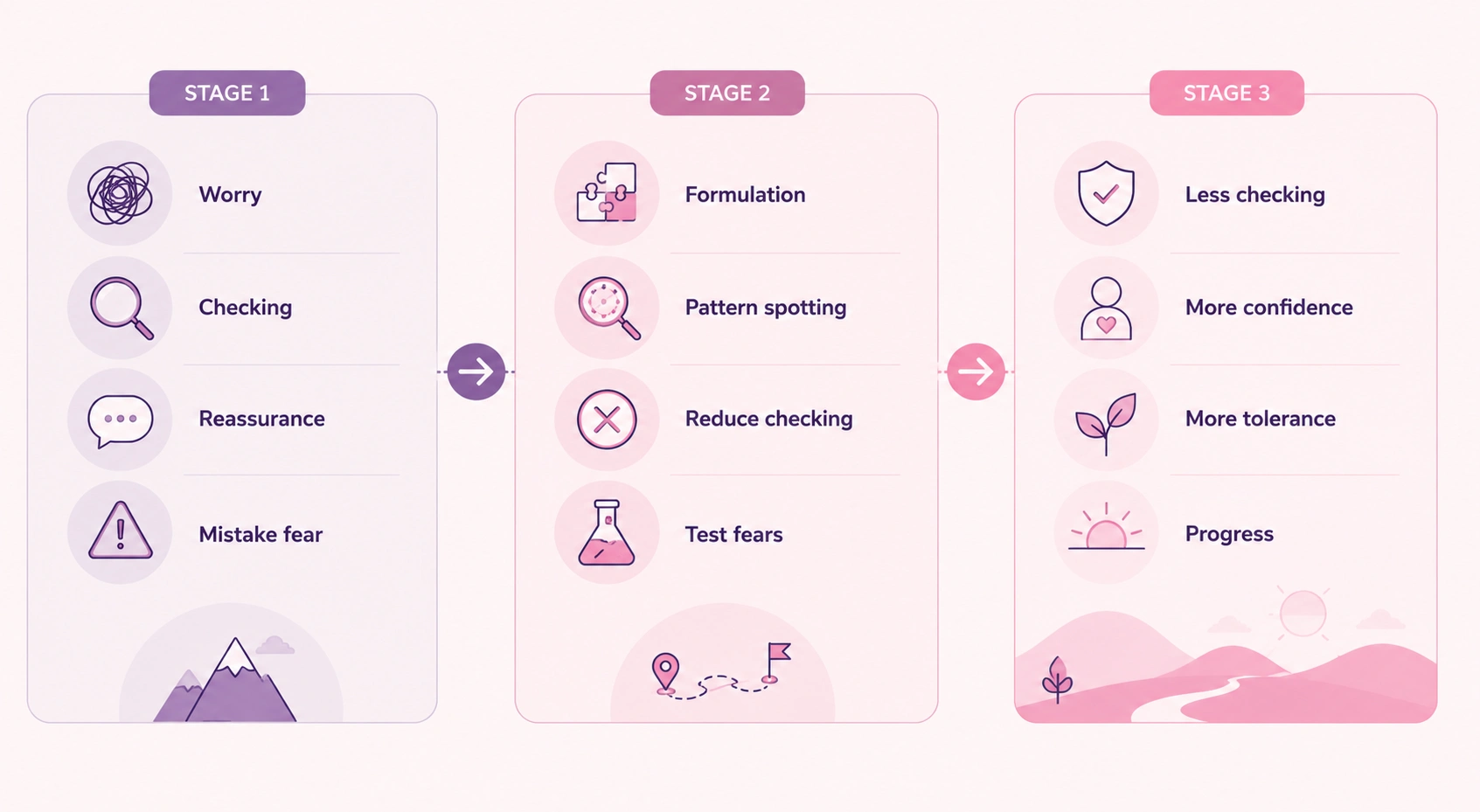
When Sarah first made contact, she described frequent worry, repeated checking, difficulty making decisions and a strong fear of letting people down. She found it hard to switch off after work and often replayed conversations in her mind.

The Longitudinal Formulation That Was Developed

As therapy progressed, it became clearer that Sarah had grown up with very high expectations around performance and behaviour. She had learned to treat mistakes as especially important and to link criticism with personal failure. Over time, this seemed to develop into a deeper belief that making mistakes meant not being good enough. From there, she had adopted rules around getting things right, staying in control and avoiding criticism.

How This Guided CBT Work

In current situations, these rules were activated by uncertainty at work and in relationships. Sarah checked messages repeatedly, over-prepared for conversations and sought reassurance before making decisions. We used the formulation to help her notice when the old rule was running the show. Therapy then focused on reducing checking in planned steps and testing what actually happened when she allowed more uncertainty.

The Successful Results

Over time, Sarah became better at recognising the pattern earlier. She still felt anxious at times, but she became less dependent on checking and reassurance. The progress was realistic rather than dramatic. She did not stop caring about mistakes altogether, but she became more able to tolerate uncertainty and less controlled by the need to get everything right.

Case Study From a CBT Therapist’s Perspective

Common Misunderstandings About Longitudinal Formulation

A few misunderstandings are worth clearing up.

It Is Not About Blaming Parents or the Past

The aim is not to blame anyone. It is to understand how certain ways of thinking and coping may have developed.

It Does Not Mean the Past Controls the Present

Earlier learning can influence anxiety, but CBT is still focused on what can change now. The formulation is used to guide practical work in the present.

It Is Not Needed for Every CBT Problem

Some people benefit from a more present-focused formulation. A longitudinal formulation may be more useful when patterns are longstanding, repeated or spread across several areas of life.

It Is Not a Fixed Story

Like any formulation in CBT, it is a working map. It can change as therapy develops and as the person notices more about how the pattern works.

Final Thoughts

Longitudinal CBT Formulation can help make anxiety feel less random by showing how earlier learning, deeper beliefs and present-day triggers may be connected. It does not reduce a person to their past. It gives the therapist and client a clearer way to understand why certain fears keep returning and where practical CBT work can begin.

FAQs

Longitudinal CBT Formulation is a CBT way of understanding how a person’s difficulties may have developed over time. It links earlier experiences, deeper beliefs, rules, current triggers and present maintaining factors.

A standard CBT formulation often focuses on the current pattern, such as triggers, thoughts, emotions, behaviours and what keeps the problem going now. A longitudinal formulation adds the person’s timeline and looks at how older learning may still shape present anxiety.

Beck’s longitudinal formulation links earlier experiences, core beliefs, rules or assumptions, later activating events and current symptoms. It helps explain how present anxiety can be connected to deeper beliefs that developed over time.

Yes, it can be very useful for anxiety, especially when similar fears keep showing up in different situations. It can help explain why the same underlying beliefs or rules appear in work, relationships, health worries or decision-making.

No. The purpose is not to blame the past, but to understand how a pattern developed. CBT still uses that understanding to focus on what can change in the present.

Author Bio

James Hicks

Disclaimer

This page is for general information and education. It is not personalised advice, diagnosis, or a substitute for professional assessment.

CBT Bristol

Take the First Step Towards Change

NOSA CBT offers evidence-based therapy for OCD, hoarding help, phobias, health anxiety, social anxiety, PTSD, panic disorder, and generalised anxiety disorder. We also provide a specialist OCD clinic, professional CBT supervision training, and CBT training and teaching for mental health professionals.

Get in touch today to find out how we can help.